
In today’s fast-changing digital world, businesses need more than traditional advertising to reach their customers. People now search for products on Google, discover brands through social media, watch videos before making purchasing decisions, and compare businesses online. This shift in consumer behaviour has made digital marketing an essential part of business growth.
Whether you run a small local business, startup, or large company, having a strong online presence can help you connect with the right audience and achieve your business goals. Digital marketing allows businesses to promote their products and services through online channels while measuring the performance of their marketing campaigns.
In this blog, let’s explore what digital marketing is and why it is important for businesses in 2026.
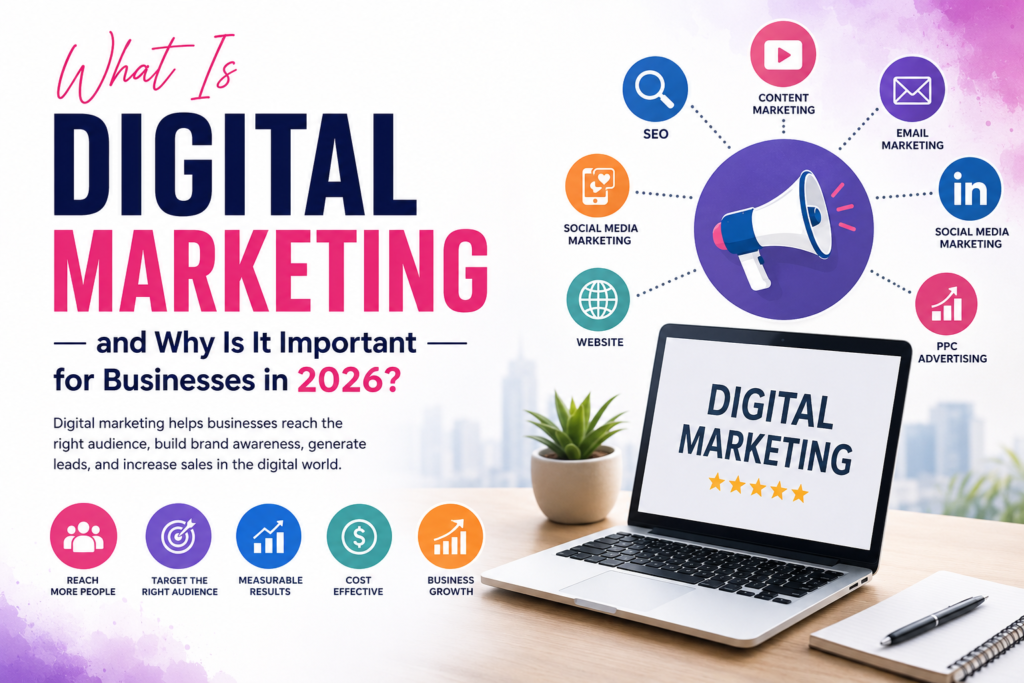
What Is Digital Marketing?
Digital marketing refers to the promotion of products, services, or brands using digital channels and online platforms. It helps businesses connect with potential customers through the internet, search engines, social media platforms, websites, emails, and online advertisements.
Unlike traditional marketing methods such as newspapers, television, and billboards, digital marketing allows businesses to reach a specific audience and track campaign performance.
For example, a business can use Google to attract people searching for its services, Instagram to build brand awareness, or email marketing to maintain relationships with existing customers.
Digital marketing has become an important strategy for businesses because customers spend a significant amount of time online.
Why Is Digital Marketing Important for Businesses in 2026?
In 2026, having a physical business location alone is not enough to attract customers. Most consumers search online before making decisions about products and services.
A strong digital presence helps businesses become more visible, competitive, and accessible to potential customers.
Here are some major reasons why digital marketing is important for businesses.
1. Helps Businesses Reach a Larger Audience
Digital marketing allows businesses to reach customers beyond their physical location. A local business can attract customers from different cities, while an online business can reach audiences across the country or even globally.
Through search engines, social media, websites, and online advertising, businesses can connect with people who are interested in their products or services.
This creates more opportunities for business growth.
2. Cost-Effective Compared to Traditional Marketing
Traditional advertising methods can be expensive, especially for small businesses. Television advertisements, newspaper advertisements, and billboards often require a large marketing budget.
Digital marketing provides more affordable options.
Businesses can start with strategies such as:
- Search Engine Optimization (SEO)
- Social Media Marketing
- Content Marketing
- Email Marketing
- Google Ads
- Pay-Per-Click Advertising
Even businesses with a limited budget can build an online presence and gradually grow their audience.
3. Helps Target the Right Audience
One of the biggest advantages of digital marketing is audience targeting.
Businesses can promote their products and services to people based on factors such as:
- Age
- Location
- Interests
- Online behaviour
- Search activity
- Purchasing preferences
This helps businesses avoid spending their marketing budget on people who may not be interested in their products.
Targeted marketing can improve the chances of generating quality leads and conversions.
Major Types of Digital Marketing
Digital marketing includes different strategies that work together to improve a brand’s online presence.
Search Engine Optimization (SEO)
SEO is the process of improving a website so that it can appear higher in search engine results.
When people search for products, services, or information on Google, businesses with well-optimized websites have a better chance of being discovered.
SEO involves activities such as keyword research, content optimization, technical SEO, and link building.
Social Media Marketing
Social media marketing involves promoting a brand through platforms such as Instagram, Facebook, LinkedIn, and other social networks.
Businesses can use social media to:
- Build brand awareness
- Engage with customers
- Promote products and services
- Share valuable content
- Generate leads
A strong social media presence can help businesses build trust and maintain long-term relationships with customers.
Content Marketing
Content marketing focuses on creating valuable and relevant content for a target audience.
This can include:
- Blog posts
- Videos
- Infographics
- Social media content
- Guides
- Case studies
High-quality content helps businesses educate their audience, build trust, and improve their online visibility.
Email Marketing
Email marketing allows businesses to communicate directly with potential and existing customers.
Businesses can use emails to share:
- Product updates
- Special offers
- Newsletters
- Educational content
- Promotional campaigns
When used effectively, email marketing can help build strong customer relationships.
Pay-Per-Click Advertising (PPC)
PPC advertising allows businesses to display advertisements on search engines and other online platforms.
Google Ads is one of the popular examples of PPC advertising.
Businesses usually pay when someone clicks on their advertisement. This strategy can help generate faster visibility and attract targeted traffic.
Digital Marketing Provides Measurable Results
Another important advantage of digital marketing is the ability to measure campaign performance.
Businesses can track important metrics such as:
- Website traffic
- Number of visitors
- Click-through rate
- Engagement
- Leads
- Conversions
- Return on investment
This data helps marketers understand what is working and what needs improvement.
Unlike many traditional marketing methods, digital marketing allows businesses to make data-driven decisions and optimize campaigns for better results.
The Role of AI in Digital Marketing
Artificial Intelligence is becoming an increasingly important part of digital marketing.
AI-powered tools can help marketers save time, analyze data, automate repetitive tasks, and create more personalized customer experiences.
Some applications of AI in digital marketing include:
- Content assistance
- Marketing automation
- Customer chatbots
- Data analysis
- Personalized recommendations
- Predictive analytics
- Ad campaign optimization
However, AI should be used as a supporting tool rather than a complete replacement for human creativity and strategy.
Successful marketing still requires understanding customer needs, creating valuable content, and building authentic relationships.
How Digital Marketing Helps Small Businesses
Digital marketing is especially valuable for small businesses that want to compete with larger brands.
A small business with a well-optimized website and strong marketing strategy can attract customers without spending huge amounts on traditional advertising.
For example, a local business can use Local SEO to appear when customers search for nearby products or services.
Social media can help small businesses showcase their products and interact directly with customers.
Content marketing can establish expertise and build trust.
These strategies give small businesses an opportunity to compete effectively in the digital marketplace.
Digital Marketing Trends Businesses Should Watch in 2026
The digital marketing industry continues to evolve as technology and consumer behaviour change.
Some important trends businesses should focus on include:
AI-Powered Marketing
AI tools are helping marketers improve productivity, analyze customer behaviour, and personalize marketing campaigns.
Video Marketing
Short-form and long-form videos continue to be powerful tools for engaging audiences and communicating brand messages.
Personalized Customer Experiences
Customers increasingly expect brands to provide relevant and personalized experiences.
Voice and Conversational Search
Businesses should focus on creating clear and helpful content that answers customer questions naturally.
First-Party Data
Understanding and responsibly managing customer data is becoming increasingly important for creating effective marketing strategies.
Authentic Content
Consumers are more likely to connect with brands that create genuine, helpful, and relatable content.
How Businesses Can Build an Effective Digital Marketing Strategy
A successful digital marketing strategy should start with clear goals.
Businesses should first understand:
- Who is their target audience?
- What problems do their customers have?
- Which digital platforms do their customers use?
- What are the business goals?
- Which marketing strategies can help achieve those goals?
After identifying these factors, businesses can create a strategy that combines different digital marketing channels.
For example, SEO can help attract organic traffic, social media can build brand awareness, content marketing can educate customers, and paid advertising can generate faster results.
The key is to create a consistent strategy rather than using random marketing activities.
Conclusion
Digital marketing is no longer an optional strategy for businesses. In 2026, it has become an essential part of building brand awareness, attracting customers, and achieving sustainable business growth.
From SEO and social media marketing to content creation and AI-powered marketing, businesses have numerous opportunities to connect with their target audience online.
The biggest advantage of digital marketing is its ability to reach the right people, measure results, and continuously improve marketing strategies.
Businesses that understand their customers, create valuable content, and adapt to changing digital trends will have a stronger chance of succeeding in an increasingly competitive online marketplace.
Whether you are a small business owner or an established company, investing in the right digital marketing strategy can help you build visibility, trust, and long-term growth.
Frequently Asked Questions
What is digital marketing in simple words?
Digital marketing is the promotion of products, services, or brands using online platforms such as search engines, websites, social media, email, and digital advertisements.
Why is digital marketing important for businesses?
Digital marketing helps businesses reach a larger audience, target potential customers, build brand awareness, measure campaign performance, and generate leads and sales.
What are the main types of digital marketing?
The main types include Search Engine Optimization (SEO), Social Media Marketing, Content Marketing, Email Marketing, Pay-Per-Click Advertising, and Search Engine Marketing.
Is digital marketing useful for small businesses?
Yes. Digital marketing provides cost-effective opportunities for small businesses to build an online presence, reach potential customers, and compete with larger businesses.
What is the future of digital marketing?
The future of digital marketing will increasingly involve AI, personalization, video content, automation, data-driven strategies, and customer-focused experiences.